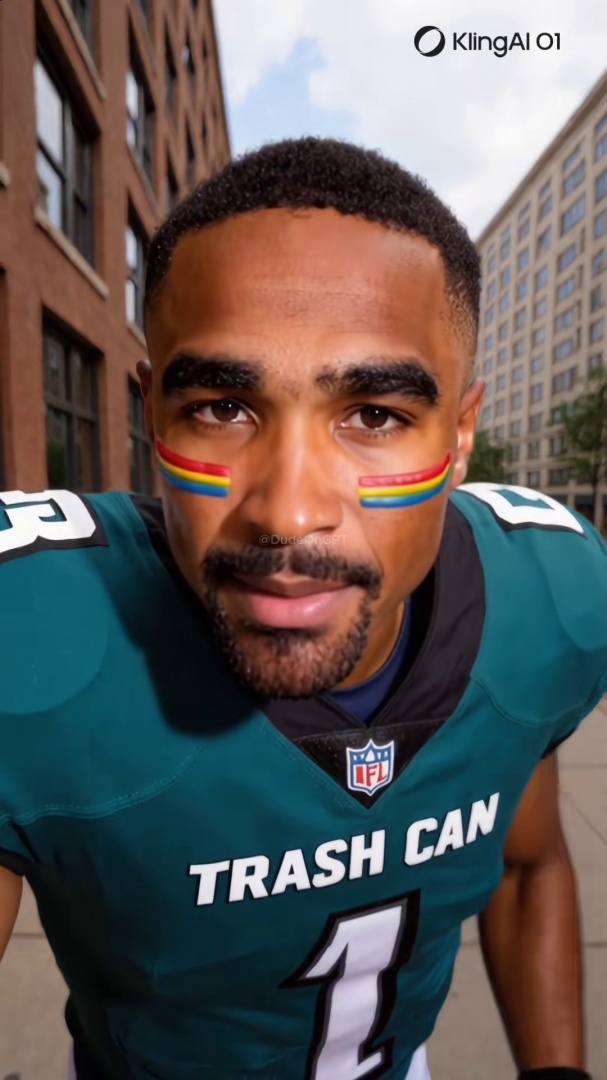
Quick answer: Strangers are now cloning your voice and face from publicly posted YouTube videos to fake-endorse products you never approved. The April 2026 cases of Sheriff Ronnie Dodson and cosmetologist Karen Flowers show the pattern. To remove it, send a DMCA takedown to the platform, file a right-of-publicity claim, and post a public denial on your real channels.
In April 2026, Sheriff Ronnie Dodson of Brewster County, Texas, learned from a constituent that he had spent the past week endorsing a health supplement on TikTok. Except he had not. Someone had taken old footage from his real interviews, cloned his voice using a few seconds of YouTube audio, and built a synthetic endorsement video that ran for two weeks before he saw it.
The same week, Karen Flowers, a Virginia cosmetologist with a modest YouTube following, found her face from her hair tutorials spliced into an AI-generated video promoting life insurance she had never heard of.
Neither of them is famous. Neither of them has more than a few thousand subscribers. That is the point. Likeness-theft fraud now works at the medium-reach scale: police officers, licensed professionals, doctors, podcasters, and creators with 1,000 to 100,000 followers are the new sweet spot for these operations, not just A-list celebrities.
This post walks through how the scam works, the six signals that give it away, what to do if a deepfake of you appears online, and how to make yourself harder to clone in the first place.
3 seconds of audio is now enough to clone a voice convincingly. Combined with single-photo face video generation, the result is a full AI deepfake built from a small public footprint. Earlier voice-cloning research required 20+ hours of clean audio. Source: McAfee 2023 voice-cloning research; 2024 academic demonstrations of single-photo video generation.
What Is Actually Happening
The technology behind likeness theft is the same technology covered in the explainer on what a deepfake actually is. The economics are what changed.
In 2022, cloning a voice required hours of clean source audio and significant compute. In 2026, three seconds is enough, and the compute runs on a consumer GPU or a low-cost cloud instance. The face-swap models that dominated 2024 paired with current voice-cloning models produce convincing 30-second endorsement videos at low total cost on consumer hardware. The economics support running these operations against thousands of medium-reach creators in parallel.
The supply side is the public content creators have spent years posting. Every podcast, every YouTube tutorial, every TikTok with your face and voice is potential training material. You cannot retroactively un-publish, and the legal frameworks for handling commercial likeness theft were not designed for synthetic media.
The output side is fake endorsements: health supplements, crypto schemes, insurance products, get-rich-quick courses. The fraud farm runs the synthetic video as paid ads, drives traffic to a sketchy product page, and clears the revenue before the real person finds out.
This is structurally different from the voice-cloning family scam pattern where a stranger calls a relative and impersonates you. That attack is one-to-one. Likeness theft is one-to-many: your stolen face appears in front of millions of strangers as a commercial endorsement.
Six Tells of a Likeness-Theft Deepfake
These show up consistently across documented likeness-theft cases in 2024, 2025, and 2026.
1. The endorsed product is off-brand for the source person. A sheriff selling health supplements; a cosmetologist selling insurance; a software engineer selling cryptocurrency. The mismatch between the person's real expertise and the advertised product is the strongest single signal. Anyone who has watched the real person knows the endorsement is wrong before any visual analysis.
2. The audio rhythm is too clean. Real recorded speech has hesitations, breath sounds, false starts, and verbal fillers ("um," "you know," "so"). Cloned voices reading scripted text produce remarkably even cadence with none of those. If a 30-second video has no breath audible and no filler words, that is a strong signal the voice was generated, not recorded.
3. Lip-sync micro-misalignments on plosive consonants. B, P, and M sounds require lips to come together. Face-swap models drag lip movement by one or two frames behind the audio, especially when the lighting on the face is varied. Watch the lips on these specific consonants in slow motion.
4. Cuts and B-roll feel pasted in. The video uses footage that clearly came from elsewhere, with a frozen "thinking pose" that lasts a beat too long, or outdoor shots stitched to indoor audio. The seams show under careful viewing.
5. No original talking-head footage. A real new endorsement video would include a fresh shoot. A likeness-theft fake recycles old footage with new audio dubbed over. If every shot of the person comes from existing online content you can identify, that is the tell.
6. The hosting account has no original content. Click the username posting the video. If the account exists only to repost endorsements (no personal posts, no engagement, generic profile photo, recent creation date), it is almost always a fraud farm. The same account probably posts deepfaked endorsements of dozens of other people.
For the broader visual-tells framework that applies to any deepfake video, see the 6 visual tells that instantly give away an AI face. These six likeness-theft tells are the commercial-fraud-specific application of those principles.
Think you found an AI video?
Paste the URL and let the Ledger community verify it. Free.
What to Do If You Find a Deepfake of You
Six steps in order. The first hour matters because the longer the fake stays up, the more reputational and financial damage it does.
1. Document before reporting. Capture the URL, the account name, and a screen recording of the video with the URL visible in the address or share menu. Take screenshots of any captions, comments, and engagement metrics. Do not just download and report. Once the platform removes the content, the evidence is gone, and you may need it later for a civil suit, a right-of-publicity claim, or a law enforcement report.
2. Send a DMCA takedown to the platform. The DMCA covers the original footage the deepfake was trained on or recut from, which usually includes your own published videos. Asserting copyright ownership of those source recordings is generally the fastest removal path, often faster than the AI-disclosure forms. Major platforms (TikTok, YouTube, Instagram, X) all have DMCA notice-and-takedown systems with documented response times. Right of publicity, covered separately below, applies to the commercial use of your likeness independent of the source footage.
3. File a right-of-publicity claim. Most US states recognize a right of publicity, your right to control commercial use of your likeness. California, New York, Texas, Florida, and Tennessee have particularly strong statutes. A demand letter from an attorney often resolves likeness-theft cases without litigation. Some plaintiffs' attorneys take these cases on contingency once damages are clear.
4. Report the fraud. File complaints with the FTC at reportfraud.ftc.gov, with your state attorney general's consumer protection unit, and with the FBI's Internet Crime Complaint Center at ic3.gov. Each report adds to the pattern data prosecutors use against fraud farms.
5. Issue a public statement on your own real channels. Tell your real audience that the video circulating with your face is not you, and link to it directly so they can recognize the specific fake. The faster you do this, the less damage to your reputation. Pin the post to the top of every real channel you control.
6. If the deepfake involves intimate or sexual content, the TAKE IT DOWN Act takedown process applies and is faster than DMCA: 48-hour platform removal is required by federal law starting May 19, 2026.
How to Make Yourself Harder to Clone
This section is what makes the post evergreen. Every action below reduces your exposure before any specific incident.
Audit your own published audio. Every podcast appearance, every YouTube video, every TikTok with your voice is potential training material for a voice clone. You cannot retroactively un-publish, but you can be aware of your exposure and act faster when something surfaces.
Watermark your real videos. A small "[Your Real Channel Name]" text overlay in a corner of every video adds friction for casual fraud farms. They will still try, but the watermark is a tell viewers can use to verify whether a video is authentic. Sophisticated forgeries can remove watermarks, but most fraud-farm operations do not bother.
Maintain a verification page on your real channels. A pinned post or "About" section that lists your only legitimate channels and explicitly states that you do not endorse products outside those channels. When a deepfake surfaces, you can link directly to this page for journalists and platform trust-and-safety teams.
Set Google Alerts on your name plus product categories. Set alerts for "[Your Name] supplement," "[Your Name] crypto," "[Your Name] insurance," and other off-brand product categories that fraud farms commonly target. You will catch most likeness-theft cases days before viewers report them.
For high-risk professionals (doctors, lawyers, financial advisors, law enforcement), preemptively register your likeness with platform verification and rights-management programs. Meta has Rights Manager and verified-account flows, YouTube has Content ID and privacy-complaint forms, and TikTok has verified-account channels for public figures. These programs are designed primarily for celebrities, but professionals with public-facing content qualify too.
Why Community Records Matter Here
Platform takedown removes one video. It does not address the operator running the fraud farm. The same operator who clones Sheriff Dodson's voice today will clone someone else's tomorrow, often through a different account on a different platform.
A community record of flagged operator accounts persists across platform takedowns. When a Ledger user flags a fraud-farm account that ran a deepfake endorsement, the flag stays attached to the operator pattern even after the platform removes the original video. The next victim who searches for the same operator can see the cumulative flag history.
This is the gap between platform compliance and durable fraud reduction. The platforms remove videos. The community closes the operator gap.
Closing
The targets named in April 2026 news coverage are not famous. A small-county Texas sheriff. A Virginia cosmetologist with a few thousand subscribers. They were chosen because the economics of likeness-theft fraud now work against medium-reach professionals, not just A-list celebrities. Anyone with a public-facing YouTube, podcast, or TikTok presence is in scope.
The legal protections exist. DMCA covers your original footage. Right-of-publicity statutes cover your face and voice. The TAKE IT DOWN Act covers intimate content specifically. None of these are fast, and all of them require documentation discipline you have to build before you need it.
The fastest defense is awareness: knowing the signals, knowing where to look, and knowing what to do in the first hour. The longer a fake of you stays online, the harder it is to undo.
Related Posts
- AI Voice Cloning Scams Hit 1 in 10 Americans. Here Is How to Protect Your Family.: the family-scam companion to this guide, where a stranger uses your voice to call a relative
- What Is a Deepfake? A Plain-English Guide for Social Media Users: the technical foundation that explains why voice and face cloning is now possible at this cost
- Remove a Deepfake of You in 48 Hours: How to Use the TAKE IT DOWN Act: the federal law that applies when likeness theft includes intimate content
- Deepfake Fraud Is Now Targeting Your Boss, Not Just Celebrities: the executive-impersonation parallel, the same operator playbook with a different attack surface