Quick answer: James Strahler II, 37, of Columbus, Ohio, pleaded guilty in April 2026 and became the first person convicted under the TAKE IT DOWN Act. On May 20, 2026, two more defendants, Arturo Hernandez of Texas and Cornelius Shannon of New Jersey, were arrested in separate Eastern District of New York complaints. Hernandez alone is accused of 113 albums of deepfake pornography of at least 50 women.
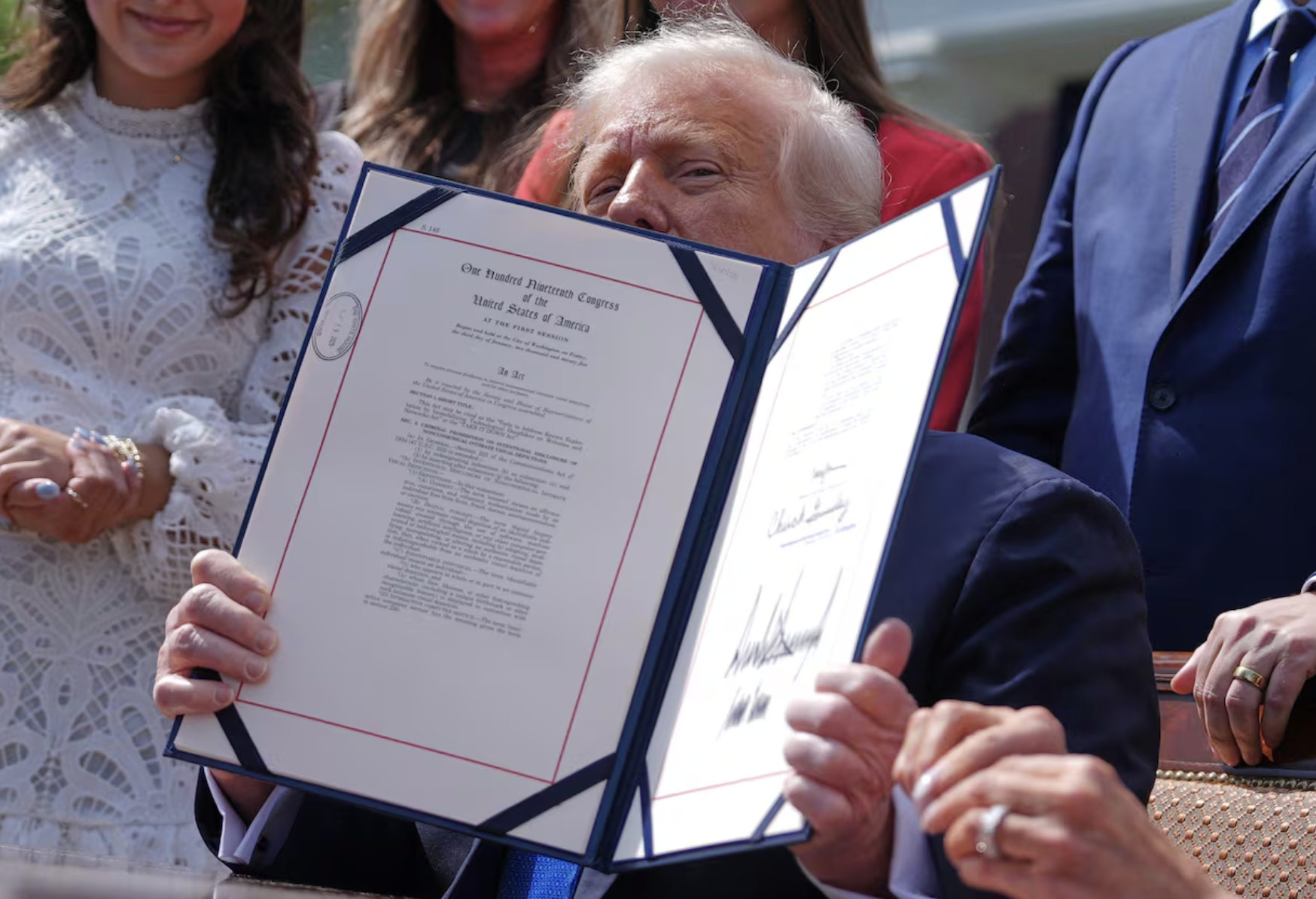
The TAKE IT DOWN Act became federal law in May 2025. For its first eleven months, the question was whether the law would have teeth or whether it would sit unenforced. The answer arrived in April 2026 with the first conviction, and the second answer arrived on May 20 with two more arrests. The enforcement record is small but real, and the specifics tell you what kind of cases prosecutors are bringing.
This post walks through the three named defendants, what each is charged with, and what the early record tells victims considering whether to report.
For the technical and legal grounding on what the law actually does, see the TAKE IT DOWN Act explainer.
The First Conviction: James Strahler II, Ohio
James Strahler II, 37, of Columbus, Ohio, pleaded guilty in federal court in April 2026 and became the first person convicted under the TAKE IT DOWN Act. He was arrested in June 2025.
The conduct prosecutors documented, per the U.S. Attorney for the Southern District of Ohio: between December 2024 and June 2025, Strahler sent harassing messages to at least six adult female victims. The messages included nude images of the victims, both real and AI-generated. Investigators found that Strahler had installed more than 24 AI platforms and over 100 AI web-based models on his phone. He produced more than 700 AI-generated obscene images of minors, including real boys from his community and animated figures, and posted them to a site dedicated to child sexual abuse material.
Strahler pleaded guilty to three counts: cyberstalking, producing obscene visual representations of child sexual abuse, and publication of digital forgeries. Sentencing has not yet been scheduled at time of writing. Under the Act, he faces up to two years for the adult-victim charges and up to three years for the minor-victim charges, with the additional counts carrying their own statutory maximums.
The case mattered because it answered the first real test: a federal prosecutor brought the charge, a federal court accepted the plea, and the law's specific provisions held up under prosecution. The infrastructure works.
113 albums of 50 women
The volume Arturo Hernandez, one of two defendants arrested May 20, 2026 under the TAKE IT DOWN Act, is alleged to have published since approximately May 2025. The site where the content appeared received nearly one million views. Some of the depicted women were recent high school graduates.
Source: U.S. Department of Justice complaint, May 20, 2026; reported by Time Magazine.
The Two May 20 Arrests: Hernandez and Shannon
On May 20, 2026, federal prosecutors in the Eastern District of New York arrested two more defendants in separate complaints, the first to be charged (rather than convicted) under the Act.
Arturo Hernandez, 20, of Texas. The complaint alleges Hernandez published at least 113 albums of deepfake pornography featuring at least 50 women, including celebrities and women who are not public figures. Some of the depicted women were recent high school graduates. The site where the content appeared had received nearly one million views by the time of the arrest. The FBI complaint indicates Hernandez sourced material from photos of women he personally knew alongside images of public figures.
Cornelius Shannon, 51, of Hasbrouck Heights, New Jersey. Shannon was charged in a separate complaint involving similar conduct. He is accused of operating or contributing to a large-scale deepfake pornography website. Per the DoJ filings the two May 20 cases together name approximately 140 victims (about 50 in the Hernandez complaint and around 90 in the Shannon complaint).
Both Hernandez and Shannon face up to two years in prison if convicted on the TAKE IT DOWN Act charges, with additional counts possible depending on minor-involved content.
The two arrests matter for a different reason than Strahler's conviction. Strahler proved the law can sustain a conviction. The May 20 arrests prove federal prosecutors are now actively running investigations and filing charges, not just accepting pleas on cases that started before the Act. The enforcement posture has shifted from reactive to active.
What the Early Record Tells Victims
Three observations from the three named defendants.
The cases prosecutors are bringing are pattern cases, not single posts. Strahler had 700+ images and 24 AI platforms; Hernandez had 113 albums and 50+ victims; Shannon was running a site, not posting an image. The Justice Department is allocating limited prosecutorial resources to operators whose conduct shows up as a pattern and where the evidence trail (platforms installed, sites operated, victim counts) is strong. A victim who has been targeted by a clearly-patterned operator is exactly the case profile prosecutors are accepting.
Reporting is what surfaces these patterns. Investigators identified Strahler in June 2025 because victims reported the cyberstalking. The Hernandez complaint reflects that some of the depicted women were public figures (likely surfacing reports through visibility) and some were private (surfacing through individual victim reports). Without victim reporting, the pattern stays buried. The full reporting flow is in what to do after you find a deepfake and the per-platform takedown notice guide.
CSAM exposure escalates the case fast. Strahler's case was charged under the higher-penalty minor-victim provisions because more than 700 of his images involved children. If the operator targeting a victim has any history of minor-involved content, the case profile changes dramatically and the federal interest rises. For parents whose child has been targeted, the parents' guide to deepfake nudes in schools covers the school-specific reporting flow and the NCMEC pathway.
If you want to check whether a specific account or video that targeted you has already been flagged by the Ledger community, paste the URL below.
Think you found an AI video?
Paste the URL and let the Ledger community verify it. Free.
The Bigger Pattern
The TAKE IT DOWN Act has now produced one federal conviction and two open prosecutions in the first thirteen months since it was signed. That is a smaller enforcement footprint than the law's most enthusiastic supporters predicted and a larger one than the most skeptical critics expected. The honest read is that the law works on the cases prosecutors choose to bring, the cases prosecutors choose to bring are pattern operators rather than one-off posters, and the trajectory is from one conviction in April to three arrests by mid-May.
For a victim deciding whether to report, the early record is informative. The pattern operators are the priority; victims who have been targeted by clearly-patterned conduct have the strongest case profile for federal interest. The platform-side 48-hour removal requirement is the parallel track and runs independently of any criminal investigation. Both pathways are now established. Both are being used.
Related Posts
- Federal Law Now Forces Platforms to Remove Your Deepfake in 48 Hours. Here Is How to Use It.: the explainer on what the law does and how the platform-side removal mandate works
- How to File a TAKE IT DOWN Act Takedown Notice on TikTok, Instagram, Facebook, X, and YouTube: the platform-by-platform reporting flow for victims using the law's removal pathway
- AI Deepfake Nudes Are Spreading in High Schools. Here Is What Parents Need to Do.: the parent-targeted action guide for the school-deepfake variant, with the NCMEC pathway
- Is It Illegal to Make a Deepfake? What the Law Actually Says in 2026: the broader legal landscape covering state laws, the DEFIANCE Act, and civil pathways alongside the TAKE IT DOWN Act