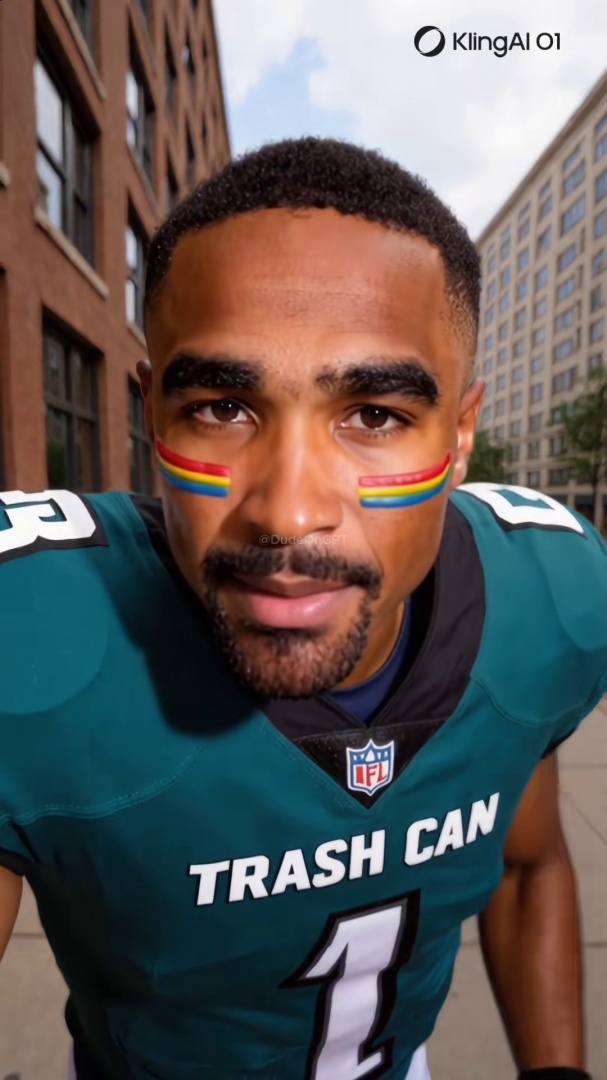
Quick answer: Americans lost $1.1 billion to impersonation scams in 2025, with AI-generated video driving the fastest-growing share. Four scam formats run on TikTok, Instagram, and Facebook: celebrity endorsement fraud, fake doctor health scams, family emergency calls, and fully synthetic influencer accounts. Each is designed to compress decision time before money moves.
In 2025, Americans lost $1.1 billion to impersonation scams. A growing share of that money was taken by fraudsters using AI-generated video to make fake endorsements look real, fake emergencies look urgent, and fake products look legitimate.
This is not a future problem.
It is happening right now on TikTok, Instagram, and Facebook. The technology required to generate a convincing fake costs less than a monthly gym membership. The return on investment for scammers is extraordinary.
Here is how it works, who it targets, and what it costs.
AI Video Became the Preferred Scam Format Because Your Brain Trusts Faces
Text scams are easy to identify. Even voice-cloning scams, where a caller mimics a family member's voice, have become familiar enough that people have started asking for verification codes before wiring money.
Video is different. The human brain processes a face as a trust signal faster than any other input. When you see a person speaking directly to camera, your skepticism drops. That is not a cognitive weakness. It is how social cognition evolved. Scammers found the exploit.
The specific shift happened in 2024 and accelerated in 2025. AI video generation reached a quality threshold where the artifacts that gave fakes away in 2022, the glassy eyes, the hand distortions, the lip sync failures, became subtle enough to miss on a phone screen at normal scroll speed. At the same time, the cost of generating a convincing fake dropped to near zero. What required a production team in 2022 now requires a $20/month subscription and a text prompt.
Fraud operations that previously relied on stolen photos and fake profiles now run entirely on generated video content, at scale, across multiple platforms simultaneously.
Four Scam Formats Are Running Right Now, and One of Them Targets People Who Are Already Scared
The formats below are not theoretical. Each one is active and documented.
The order matters less than recognizing any of them before you act.
Celebrity endorsement fraud
A generated video of a recognizable public figure, typically someone associated with wealth, business, or health, appears to endorse a financial product, supplement, or investment platform. The video links to a professionally designed landing page. The platform accepts deposits, shows fabricated returns, then blocks withdrawals or disappears.
The FTC warned in April 2026 that AI-powered celebrity impersonation scams are among the fastest-growing fraud vectors in the United States, with voice cloning and video generation both used to build the fake endorsement. Finance Complaint List documented a surge in these cases targeting crypto investors specifically.
Fake doctor and health influencer fraud
A fully synthetic person, no real individual behind the face, presents as a medical professional recommending a supplement, treatment, or health product. The face, voice, credentials, and clinic background are all generated. The product is often ineffective at best and harmful at worst.
CBS News and Media Matters both reported on this format in 2025 and 2026. The fake doctor format is particularly effective because viewers apply the trust they would give a real medical authority to an entity that does not exist.
Emergency family scams
A generated video or voice clip mimics a family member in crisis: stranded abroad, arrested, injured, in need of immediate money. These scams target older adults specifically. The FTC documented voice cloning as the primary tool, but video-capable versions are emerging as generation costs fall.
Consider what this looks like in practice. An older adult gets a video message that appears to show their adult child, crying, saying they were arrested in another city and need bail money wired immediately. The face looks right. The voice sounds right. The urgency is overwhelming. That is the design.
AI influencer product fraud
A fully synthetic influencer account, posting consistently generated content over weeks or months to build follower counts and perceived authenticity, promotes products that do not work or do not arrive. The account looks like a real creator. The product reviews are fabricated. The followers may be a mix of real people and bot accounts.
What all four formats share: they are designed to compress the time between seeing the video and sending money.
The Platforms Are Not Catching This at Scale
All three platforms use automated detection and self-disclosure requirements for AI-generated content. None of those systems are catching the fraud consistently.
Automated detection depends on metadata embedded at creation. That metadata is stripped whenever a video is processed through a screen recorder, a compression tool, or a third-party editor before upload. A scammer who runs a generated video through a screen recording app before posting faces no labeling requirement and no automated detection.
Self-disclosure requirements depend on the creator admitting the content is AI-generated. Fraud operations do not comply.
To be fair, this is a genuinely hard problem. Even well-resourced detection systems struggle when the input signal has been deliberately removed. But the current system catches compliant creators. It does not catch bad actors.
The full breakdown of how platform labeling works and where it fails is in how TikTok, Instagram, and Facebook label AI video, and where they fall short.
What Victims Actually Lose
The aggregate figures understate individual harm.
A $1.1 billion annual loss distributed across millions of victims averages to a number that sounds manageable. The distribution does not work that way.
The FTC found that the median loss in impersonation scams in 2025 was $800. But a meaningful subset of victims lost $10,000 or more, often retirement savings, emergency funds, or money sent under the belief that a family member was in danger.
The psychological cost compounds the financial one. Victims of celebrity endorsement fraud frequently report shame at having been deceived by a video. That shame reduces reporting, which reduces the data available to law enforcement, which makes prosecution harder. The scam does not end when the money is gone.
What You Can Actually Do About It
These steps work. They are not foolproof, and a sophisticated operation can defeat some of them. But they raise the friction high enough to stop most fraud before it costs you anything.
Pause before the video ends. Scam videos are engineered to produce urgency before you have time to think. The "limited time," "act now," and "only a few spots left" framing is not coincidental. It is designed to compress the window between seeing the video and sending money.
Verify independently. If a celebrity is genuinely endorsing a financial product, that endorsement will appear in credible news coverage, on their verified social accounts, and in official press releases. A claim that exists only as a social media video is not verified.
Check the account history. Accounts running AI video fraud typically have short histories, inconsistent posting before the scam content began, and follower-to-engagement ratios that do not match organic accounts.
Check the video against what the community has flagged. Before sending money based on anything you saw in a video, paste the URL into Ledger and see whether the account has already been flagged.
Know the visual tells. Lip sync, blink patterns, ear-jaw boundary artifacts, and background warping are the signals that AI video cannot yet hide consistently. The 6 visual tells that give away an AI face on video covers each one specifically.
If you do any of these things before acting, you are already harder to scam than most people who encounter these videos.
The Community Detection Layer
Platform labeling catches what it catches. Law enforcement moves slowly.
The fastest signal currently available to an individual user is what other users have already found.
When a fraudulent AI account gets flagged by enough Ledger users with enough report weight, the verdict surfaces for everyone who checks that URL afterward. One person spots the scam, reports it, and every subsequent viewer who checks gets the community's finding immediately, before they send money, before they share the video, before the scam reaches another audience.
That is the gap community-based verification fills: the window between when a scam video starts circulating and when a platform's automated system catches up to it. That window is where most of the $1.1 billion went.
Related Posts
- How TikTok, Instagram, and Facebook Label AI Videos: the platform-side of this problem, how labeling fails, and why fraud operations slip through
- That Celebrity Crypto Video Is Probably a Deepfake: the specific format of celebrity endorsement fraud and how to identify it
- The AI-Generated MAGA Influencer Who Fooled Millions: the synthetic-influencer format running on Instagram with the same trust-exploitation mechanics
- Deepfake Doctors Are Selling Fake Supplements on TikTok: the health scam format using fully synthetic authority figures