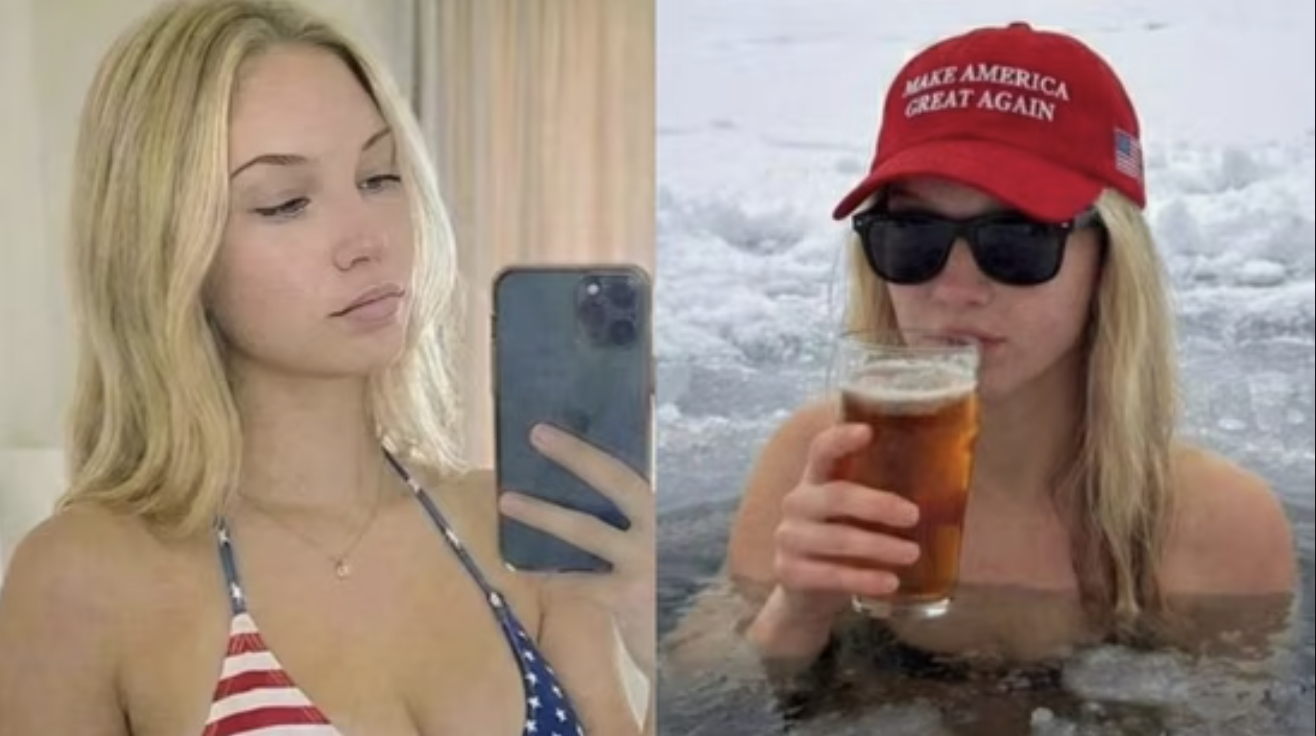
Quick answer: Emily Hart, a conservative Instagram influencer with millions of followers, was an AI-generated persona run by a 22-year-old medical student in India. He used Google Gemini to plan content and Grok to generate her photos, monetizing through Fanvue subscriptions, merchandise, and paid messages. Wired exposed it on April 21, 2026.
A conservative influencer named Emily Hart had millions of followers on Instagram. Her Reels regularly hit five to ten million views. She posted pro-Trump content, anti-immigration messaging, Second Amendment support, and photos in bikinis. Her followers believed she was a real American woman who shared their values.
She was not a real person. She was created entirely by AI. The account was run by a 22-year-old orthopedic surgery student in northern India who had never been to the United States.
Wired published the investigation on April 21, 2026. The story is not primarily about politics. It is about a deception model that is now replicable by anyone with an internet connection and thirty minutes a day.
How Emily Hart Was Built
The creator, identified in Wired's reporting only by the pseudonym Sam, built the Emily Hart persona using freely available AI tools.
Google Gemini was used to develop the content strategy. Sam described asking Gemini which niche would be easiest to monetize. Gemini reportedly advised him that the MAGA and conservative space was a "cheat code": older conservative men in the U.S. tend to have higher disposable income, and conservative audiences show stronger loyalty to creators they identify with. Sam followed the recommendation directly.
Grok, the AI image generator built by Elon Musk's xAI, was used to generate Emily Hart's photos, including explicit images sold through a subscription service.
The daily workflow took thirty to fifty minutes. Sam would generate new images, write captions aligned with MAGA talking points, and post. The algorithm did the rest. Instagram's recommendation system pushed the content to audiences who engaged with similar posts, and the account gained ten thousand followers in less than one month.
How It Was Monetized
The Emily Hart operation ran three revenue streams simultaneously.
Fanvue subscriptions. Fanvue is an adult subscription platform that, unlike OnlyFans, allows AI-generated content. Followers who paid for access received explicit AI-generated images of Emily Hart, produced using Grok.
Merchandise. The account sold MAGA-branded apparel and accessories to followers who believed they were supporting a real influencer.
Direct messaging. Followers paid for exclusive messages from Emily Hart. They were communicating with Sam, operating from India, while believing they were building a relationship with an American woman who shared their politics.
Sam described the revenue as "a few thousand dollars a month." For a medical student in India managing tuition costs and planning potential U.S. immigration, the income was substantial.
How the Deception Was Discovered
Wired's investigation identified the account and traced it back to Sam. After the story went public, Instagram removed the account for failing to disclose AI-generated content. Facebook removed associated accounts as well.
The account was not flagged by any automated system before the investigation. Instagram's AI detection did not surface it. The content ran for months, generating millions of views and real revenue, before a journalist identified it.
Sam's response when confronted was candid. He told Wired he had not seen an easier way to make money online. He described his conservative American followers in terms that made clear he had no sympathy for the people he was deceiving.
What Made This Audience Specifically Vulnerable
The Gemini recommendation was not arbitrary. Conservative audiences often describe their political identity as deeply personal, creating stronger parasocial bonds with influencers who embody those values. A young attractive woman expressing conservative views occupies a specific cultural role; the same content from a male account would not perform the same way. Audiences primed to distrust mainstream fact-checking are less likely to cross-reference. And Instagram's algorithm does not distinguish between real and AI content — it surfaces what gets engagement, which Emily Hart's content was engineered to produce.
None of these factors are unique to conservative audiences. The same model works wherever there is a passionate identity community with clear content preferences and disposable income.
The Grok Connection
Grok's role in the Emily Hart operation is part of a broader pattern.
In January 2026, the New York Times reported that Grok had generated 4.4 million images in nine days, including 1.8 million sexualized depictions of women. The Center for Countering Digital Hate estimated that Grok produced approximately 23,000 sexualized images of children in eleven days before xAI added guardrails. Ashley St. Clair, a MAGA influencer and mother of one of Musk's children, filed a lawsuit against xAI in January 2026 after Grok-generated explicit images of her circulated online.
Grok was the tool Sam used to generate Emily Hart's explicit images for the Fanvue subscription service. That use was not a misuse of the tool in a technical sense. At the time, Grok placed few restrictions on generating images of fictional AI personas.
The combination of Grok's image generation capability and Fanvue's permissive content policy for AI-generated accounts created a monetization pipeline that Sam exploited without requiring any technical sophistication beyond knowing the tools existed.
What This Looks Like Going Forward
The Emily Hart operation required one AI image tool, one AI text tool, one adult subscription platform, and thirty minutes a day. The replication cost in 2026 is near zero, the political cycle is active, and platform enforcement is reactive (Instagram did not catch Emily Hart — a journalist did). Operations that do not attract journalistic attention keep running.
Think you found an AI video?
Paste the URL and let the Ledger community verify it. Free.
How to Spot an AI-Generated Influencer Account
An account that posts only photos and no candid video is worth examining more closely. Check image consistency: AI faces often look slightly different across images because the model is generating each one independently. Look at the nose shape and jawline across multiple posts. Look for hand and background artifacts (fused fingers, garbled text, partially formed objects). Check the account history: accounts that appear with a full content library from day one and a short posting history are a pattern. Real people build audiences over time. Check the engagement-to-follower ratio: high view counts with low comment diversity (generic "gorgeous," "beautiful" replies) suggest coordinated engagement.
The full visual detection guide is at The 6 Visual Tells That Instantly Give Away an AI Face on Video.
What to Do If You Find an Account Like This
Report it to the platform under the synthetic or AI-generated content category. Instagram's report path is: three dots on the post, Report, False Information, Edited media or deepfake.
Before you report, document the account. Take a screen recording with the username and follower count visible, and note the URL. Platforms sometimes remove content during processing, which eliminates the evidence.
The full step-by-step reporting guide, including what to document and how to preserve evidence before platform action removes it, is in How to Report a Deepfake on TikTok, Instagram, or Facebook.
Paste the account URL into Ledger to see if other users have already flagged it.
Related Posts
- The 6 Visual Tells That Instantly Give Away an AI Face on Video: the visual detection guide for AI-generated images and video
- Three US Politicians Shared an AI Image as Real: The Iran Airman Incident: the other side of this pattern, where political figures themselves amplified AI content instead of creating it
- That Celebrity Crypto Video Is Probably a Deepfake: the same trust-exploitation pattern applied to financial fraud
- The $1.1 Billion Problem: How AI Video Scams Are Draining Social Media Users: the broader fraud landscape in which the Emily Hart model is one of several active formats