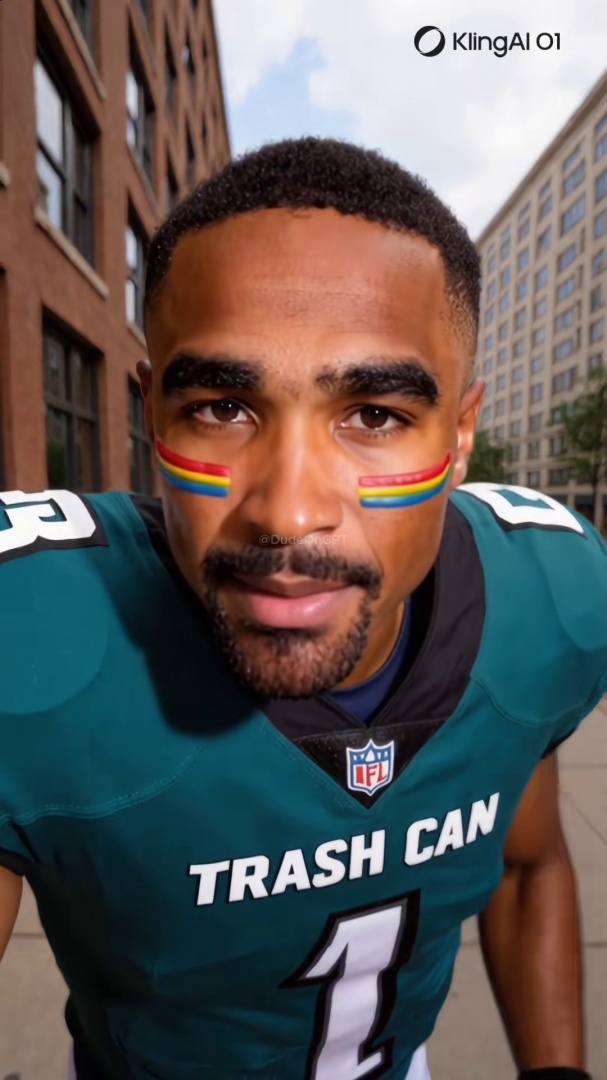
Quick answer: X's AI labeling depends on creator self-disclosure and C2PA metadata that scammers strip, so most synthetic posts arrive with no AI indicator. Spot a fake on X by reading the Community Notes attached to the post, auditing the account's age and reply cadence, reverse-image-searching attached media, and cross-referencing the claim against a non-X source within 30 seconds.
X is the platform where AI-generated content moves fastest and gets labeled least. The platform rolled out a "Made with AI" toggle in 2026, but the toggle depends on creators choosing to apply it, with automatic detection that relies on C2PA metadata that fraud accounts routinely strip. The platform also operates its own image generator, Grok, which has been documented producing thousands of synthetic images per hour during peak windows. The combination means that on X, the detection skill has to live with you, not in the platform UI.
This post covers seven X-specific signs to check yourself, the 30-second verification flow, and what to do when you find one.
For the broader technical grounding on how synthetic media is generated, see the pillar guide on what a deepfake actually is.
6,700
sexually suggestive or AI-nudified images per hour generated on X via Grok during a 24-hour window in early January 2026, according to a Center for Countering Digital Hate analysis. CCDH described the rate as far exceeding the volume produced by dedicated deepfake websites tracked in prior research.
Source: Center for Countering Digital Hate, January 2026.
Why X Is Structurally the Hardest Platform for AI Detection
Three forces make X less reliable as a self-labeling system than any other major platform.
The "Made with AI" toggle is opt-in for creators. X's automatic detection looks for C2PA Content Credentials embedded by source tools like Adobe Firefly, DALL-E, ChatGPT image outputs, and Magic Eraser exports. When a creator runs the output through any conversion tool that drops metadata (or uses a model that never embedded it), the auto-label never fires and the toggle is the only path to disclosure. Toggles are voluntary, so fraud accounts skip them.
The platform's own generator outputs synthetic content at industrial scale. Grok's image generation has been the subject of regulatory probes from the EU, France, India, Malaysia, and others. Time magazine reporting and NBC News reporting documented continued sexual deepfake generation after the platform's stated restrictions. The detection infrastructure cannot keep up with first-party generation that runs at this volume.
The blue check is paid. Verification on X is now a subscription product, not an identity confirmation. A blue check on a post tells you the account paid for X Premium. It does not tell you the account is who it claims to be, and it does not tell you the post is real. Treat the check as decoration in any AI-detection context.
The EU AI Act's Article 50 enforcement deadline of August 2, 2026 will tighten labeling rules for EU audiences, but US-side enforcement remains driven by Federal Trade Commission complaints rather than mandatory pre-publication labeling. Until that changes, the X label is one signal among many, not a verdict.
Seven Signs to Check on an X Post
These show up consistently across documented synthetic posts on X through 2025 and 2026.
1. Read the Community Notes first. This is the fastest verification on X, and it is unique to the platform. If a post has a Community Note attached, read it before forming an opinion on the post itself. Notes are crowdsourced corrections written by other X users, and on factual or AI-related claims they are often more reliable than any individual post. Notes also surface useful context (original sources, AI-generation evidence, timestamps) that the post itself omits. The absence of a Community Note is not a clean bill of health, since notes lag virality, but the presence of one is a strong signal.
2. Check for the "Made with AI" toggle and treat its absence as not-yet-evidence. Tap the post detail and look for any AI-disclosure marker. Some posts now display the label automatically based on C2PA detection. Most do not. As with Instagram's Made with AI label, an absent label catches nothing.
3. Audit the account's age, cadence, and reply pattern. Pull up the profile. A real account has a join date that is not in the last 30 days, a follower count that roughly matches engagement, replies that show personality, and a feed that mixes content. AI-driven and astroturf accounts often show: a recent join date, follower-engagement ratios that read as bot-amplified, replies that read like LLM completions ("Great point! As I was saying, this aligns with..."), and feeds that recycle the same talking points. Paid blue check is irrelevant to this audit.
4. Cross-reference the claim on a non-X source within 30 seconds. If a post claims a public figure said something, did something, or is in the news for something, search for the claim on a news site, the figure's verified non-X account, or an aggregator like Google News. A real news event exists in more than one place. A claim that lives only on X, especially one shared by an account with low follower counts that suddenly gets millions of views from a high-profile retweet, deserves the highest scrutiny. The Maduro AI arrest image is the canonical case: an X user with under 100 followers using AI image tools generated millions of views in 20 minutes after a single high-profile retweet.
5. Reverse-image-search any attached media. Take a screenshot of the image or a frame from the video. Drop it into Google Lens, TinEye, or Yandex Images. AI-generated stills typically return either zero matches or matches only on AI image-sharing sites like Civitai, Reddit AI subs, and prompt-sharing communities. Real images surface across news coverage, friends' tagged photos, professional sites, and varied real-world contexts. This catches Grok outputs reliably because the model's images do not exist in the real-world image index.
6. Read the quote tweets and the replies. Quote tweets surface verifiable contradictions faster than the post itself, because contrarians and fact-checkers concentrate there. If a post is going viral, look at the top three quote tweets and the top three replies. If multiple credible accounts are saying the post is fake, the post is probably fake. If the only contrarian voices are accounts with single-digit followers, give the post the benefit of the doubt while you check elsewhere.
7. Audit the post for AI-image tells if media is attached. The standard tells from the 6 visual tells that instantly give away an AI face on video apply to attached images and video on X just as they do anywhere else. Hands and fingers (extra digits, fused, missing, twisted), text in backgrounds (garbled, mirrored, nonsense), reflective surfaces (logos and shapes that warp), eye reflections (mismatched between left and right), and skin texture (suspiciously clean, no visible pores, even tone under directional lighting) all carry the same diagnostic weight on X content as elsewhere. Generators have improved on faces faster than they have improved on hands, text, and reflections, so those three are still the most reliable single-frame tells.
The 30-Second Verification Flow
A scannable workflow you can run on any X post before you retweet or quote-tweet.
- 0:00–0:05: Read the Community Note attached to the post if one exists. If contrarian-but-credible accounts have already flagged it, you have your answer.
- 0:05–0:15: Tap the profile. Glance at join date, follower count, feed variety, and reply cadence. Treat the blue check as decoration.
- 0:15–0:20: Read the top three quote tweets and the top three replies for verifiable contradictions.
- 0:20–0:25: If media is attached, drop a still into Google Lens or TinEye.
- 0:25–0:30: Search the underlying claim on Google News or the figure's verified non-X account. Real news exists in more than one place.
If two or more signals fail, do not amplify. The flow is short enough to run on every post that asks you to feel something strong: outrage, validation, fear, urgency. Those are the posts operators design to spread.
What to Do When You Find a Synthetic Post
If you have confirmed a post is AI-generated and being passed off as real, the action depends on what kind of harm it threatens.
For non-consensual intimate content (sexual deepfakes), file under the TAKE IT DOWN Act. As of May 19, 2026, every covered platform must remove a victim-reported deepfake of intimate imagery within 48 hours. The full filing flow including X is in how to file a TAKE IT DOWN Act takedown notice.
For misinformation or impersonation that does not involve sexual content, report the post inside X (three-dot menu, Report post, then select Misinformation or Impersonation as relevant). X's response history on misinformation reports is uneven, so document everything you submitted.
For fraud (fake celebrity endorsements, scam crypto promotions, fake giveaways), report the post and submit an FTC complaint at reportfraud.ftc.gov. The FTC tracks deepfake-enabled fraud as a fast-growing category.
For everything else, the most effective single action is not to engage. Do not quote-tweet, do not screenshot the original to mock it, do not reply with corrections that lift the original to your followers' feeds. Engagement, including negative engagement, is what virality runs on. Quoting a Community Note from outside the original thread reaches the same audience without amplifying the synthetic post.
If you want to check whether a specific X post or the account behind it has been flagged by the Ledger community, paste the URL below.
Think you found an AI video?
Paste the URL and let the Ledger community verify it. Free.
What Ledger Does Differently
The platform-detection skill set transfers across every major social network, but each platform has structural quirks. TikTok's For You Page makes account-vetting heuristics dominant. Instagram's Made with AI label is loud but unreliable. Facebook's older user base shifts the work to checking who is sharing. YouTube's channel pattern matters more than any single video.
X is structurally distinct. Community Notes is the platform's most reliable AI-related signal and the one no other platform replicates. The blue check is the platform's least reliable identity signal. The platform's own generator outputs synthetic content at a scale no labeling system can fully cover.
What community verification adds across all five platforms is persistence. When Ledger users flag a synthetic X account, the flag stays attached to the operator pattern: the bio, the writing voice, the post template. The next time the same operator spins up a new handle, the cumulative flag history is searchable.
If you came here wanting to verify whether a specific X post or the account behind it is AI-generated, that is exactly what Ledger is for. Paste the URL or the @username into the free AI video detector. Free, no signup, no fees.
If you want to help build the record so the next person who lands on a fake X post sees it flagged before they share, join the iOS or Android waitlist and be among the first to flag accounts when the apps ship.
[APP-DOWNLOAD]
Related Posts
- How to Tell If a TikTok Video Is AI-Generated: 7 Signs to Check Right Now: the canonical TikTok-specific detection guide
- How to Tell If an Instagram Reel Is AI-Generated: 7 Signs to Check Before You Share: the Instagram sibling pillar
- How to Tell If a Facebook Video Is AI-Generated (and Help Your Parents Spot One): the Facebook sibling pillar
- How to Tell If a YouTube Video Is AI-Generated: 7 Signs to Check Before You Subscribe: the YouTube sibling pillar